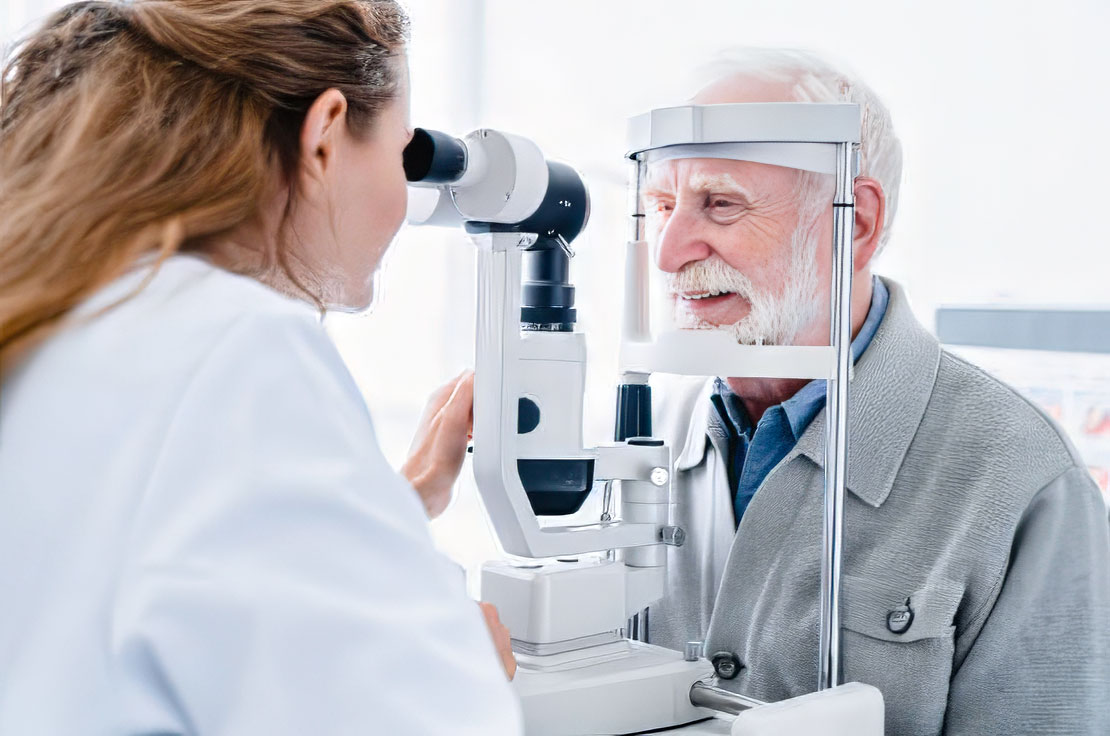
Care You Can See
We’ve been serving as your primary eye doctor for years.

From providing free screenings for children before they enter school for the first time to vision-saving early detection of glaucoma to co-managing complex care after cataract surgery and everything in between, we’ve worked to save, improve and promote good vision.
And we not only safeguard your eye and vision health, but doctors of optometry also are on the front lines of detecting diseases such as diabetes and heart disease.
Our credentials, quality care and compassion for the community results in care you can see.



Our Credentials
Optometry school consists of four years of post-graduate, doctoral-level study concentrating on the eye, vision and associated systemic diseases. Course work and continuing education are constantly updated to keep up with all new technologies, including lasers and other medical treatments related to eye disorders.
Optometrists also must undergo 15 hours of continuing education each year to stay current on the latest standards of care. In addition, many optometrists are credentialed for Expanded Therapeutic Procedures, which requires 20 hours of continuing education.
Optometry is one of the only doctoral-level professions to require continuing education in every state for license renewal.
To perform additional procedures, further training and testing requirements are mandatory.

Quality Patient Care
Most Kentuckians receive their primary eye care from their local doctor of optometry. Optometrists practice in more than 85% of Kentucky counties and are readily accessible, which improves early detection of vision-threatening disease.
An eye examination provides the best window to assess the body’s vascular health condition. Blood vessels in the retina are visible during an eye examination, and many previously undiagnosed systemic conditions can be found. In fact, the eye is the only place on the body that provides a non-invasive view of blood vessels and nerves.

As primary eye-care doctors, we:
- Examine your eyes for any vision defects and provide early detection of eye diseases;
- Treat and manage eye diseases and injuries;
- Prescribe glasses, contact lenses and other devices to enhance your vision;
- Prescribe medications to treat eye diseases and perform certain surgical procedures;
- Perform testing to determine your ability to focus and coordinate the eye, judge depth perception and see colors accurately;
- Regularly diagnose diseases both of the eye and the body; and,
- Work with your family physician and other medical professionals to coordinate your care.
Doctors of optometry truly serve as gatekeepers to the overall health of their patients. Many systemic diseases, such as diabetes and high blood pressure, are first found by optometrists during a comprehensive eye exam.
Compassion for the Community
Doctors of optometry deploy their training and skill in volunteer community efforts. From volunteering with the Special Olympics Lions Club International Opening Eyes screening for athletes at the Summer Games to providing free screenings in rural public schools to serving at free faith-based health-care clinics, your eye doctor is committed to the community.
Collectively, through the Kentucky Optometric Association, Kentucky optometrists have provided approximately $20 million in free vision care to 50,000 low-income Kentuckians through the charitable nonprofit Kentucky Vision Project since 1985.
That’s Care You Can See – in your vision, your health and your community.